

Table of Contents
The Power of AI to Drive Customer Communication and Customer Engagement
1. AI-Enabled Chatbots to Deliver Real-Time Support
Chatbot adoption has been skyrocketing in recent years. The adoption rate has been so consistent and rapid that Gartner estimates that by 2020, at least 25% of customer service operations will be using virtual customer assistants like chatbots. The business impact of chatbots will come in the form of accelerated responses to customer queries, savings in time in attending to customer service calls, and drastic productivity improvements in rendering customer service. In fact, IBM estimates that chatbots can cut down resolution times from 38 hours to under 5.4 minutes for tier q inquiries. Customer service agents, who are offering live support to customers, will also be able to bank on the intelligence of chatbots to provide contextually correct assistance. Nowadays, this is exactly what customer communication platforms (like Zendesk and Acquire, for example) are trying to do. These platforms enable businesses to deliver in-the-moment customer engagement with the help of AI-powered chatbots to engage, support, or even onboard customers. Instant communication with chatbots combined with multi-channel support (websites and mobile apps) will, therefore, deliver insightful details to strengthen your customer engagement strategies.2. Personalized Product Offers to Maximize Order Value
According to PwC’s Future of customer experience study, 63% of customers are willing to share their data for personalized experiences. Businesses are also willing to offer personalized services. But, this, of course, is easier said than done. Imagine how difficult it would be for any online store to provide personalization at scale? Amazon, for instance, handles billions of transactions on a daily basis. To provide personalized product recommendations to each customer would be impossible. But, with the data-crunching capabilities of AI, what was once simply a pipe-dream is now a reality. Today, AI can sift through recorded customer preferences, their demographics, and also recent shopping behavior to suggest related products that the customer would be interested in. A classic example of this would be Adidas and its “Complete the Look” recommendation feature. The sportswear giant has partnered with artificial intelligence platform provider Findmine to generate outfit recommendations that help customers complete their look.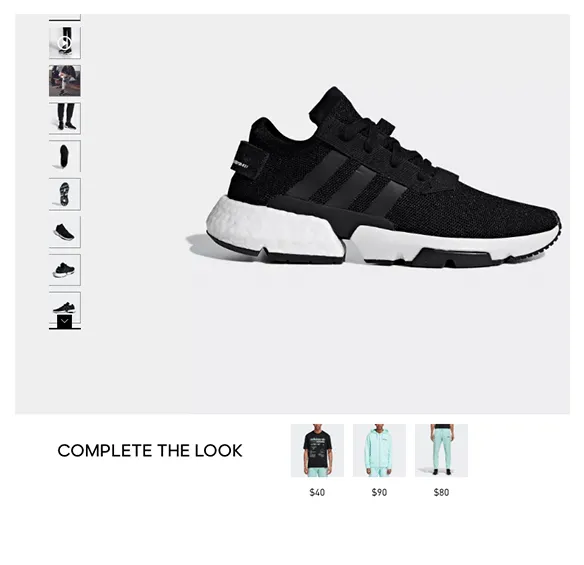
3. Personalized Customer Journeys Through Chatbot Integration
When you visit a brick-and-mortar store, a store assistant with a good service attitude can show you around to find the right product or service. But, for a website visitor, hopping from one page to another looking for information can be exasperating. Chatbots can prove to be a life-saver here. They can ease the purchasing process by conversing with the customers to help them identify their exact requirements. A good example to look at here is Expedia, a globally reputed online travel agency that helps customers book flight tickets, hotel accommodation, car rentals, vacation packages, and much more. Expedia integrated a Facebook Messenger bot into its Facebook page to help customers ease the process of travel booking. The chatbot asks for specific information like traveling city, dates, type of accommodation expected, etc., and then based on the customer’s input, the bot suggests the five most popular hotel options in the chosen location.
Image Source
Similar to Expedia, other travel planning and booking websites like KLM Airlines and Booking.com have also taken to chatbot integration for offering customer journey personalization.4. Feedback Collection and Sentiment Analysis to Measure Customer Engagement
Did you know that only 1 out of 26 unhappy customers complain? The rest simply churn. For this reason, it is imperative that businesses collect customer feedback so that they can offer their customers a better experience. The feedback collected must also be subjected to analysis to zero in on areas that are working well and those that need improvement. Can AI lend a helping hand in this space? Of course, yes. Chatbots and conversational interfaces can help in feedback collection and sentiment analysis to measure customer engagement. But what exactly is sentiment analysis? Sentiment analysis is an automated process that leverages artificial intelligence to methodically analyze text to evaluate the intended feeling of the text. For instance, the use of certain negative words could mean that the customer is upset while the use of cheerful words can mean the customer is satisfied with the business. KDnuggets classifies sentiment analysis into three popular classes as depicted below: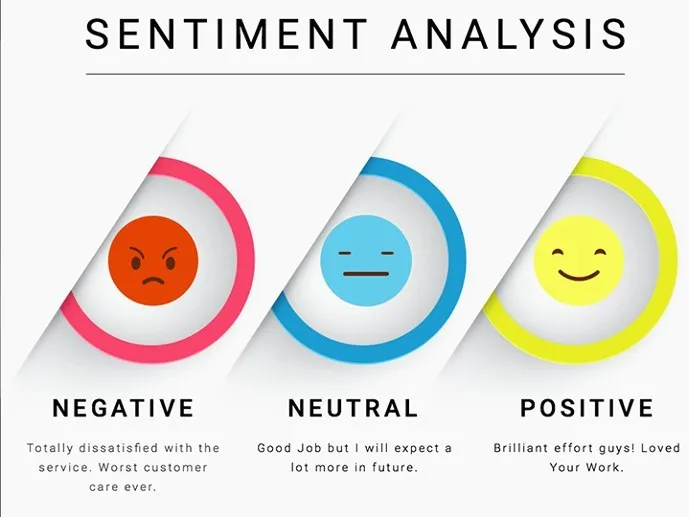
Image Source
Customer feedback collection, along with sentiment analysis, can help a business figure out what is working well and what is causing frustration for their customers.