
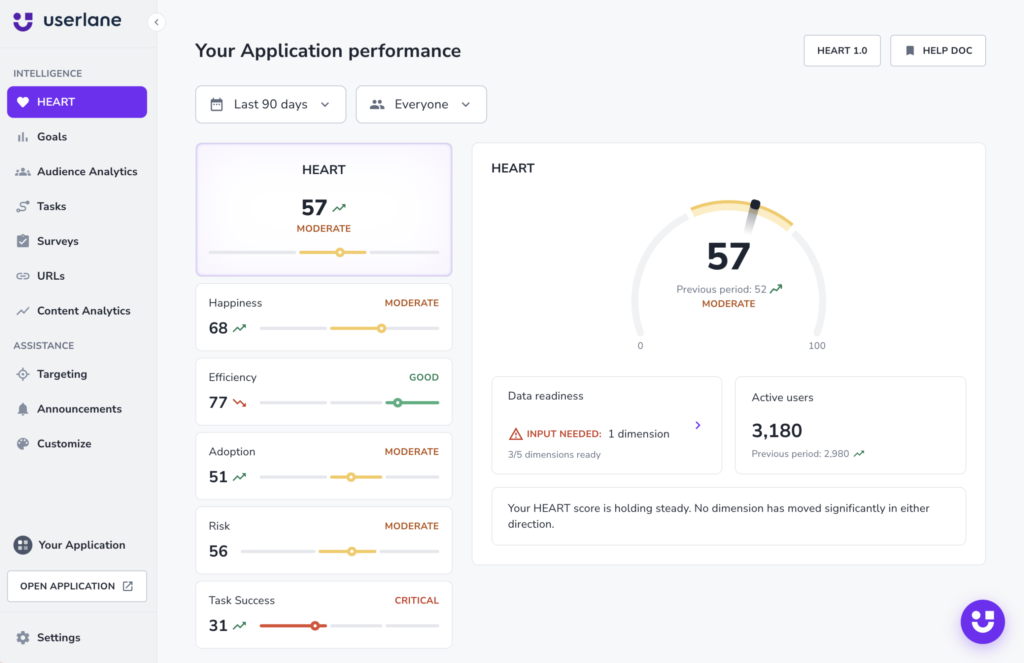
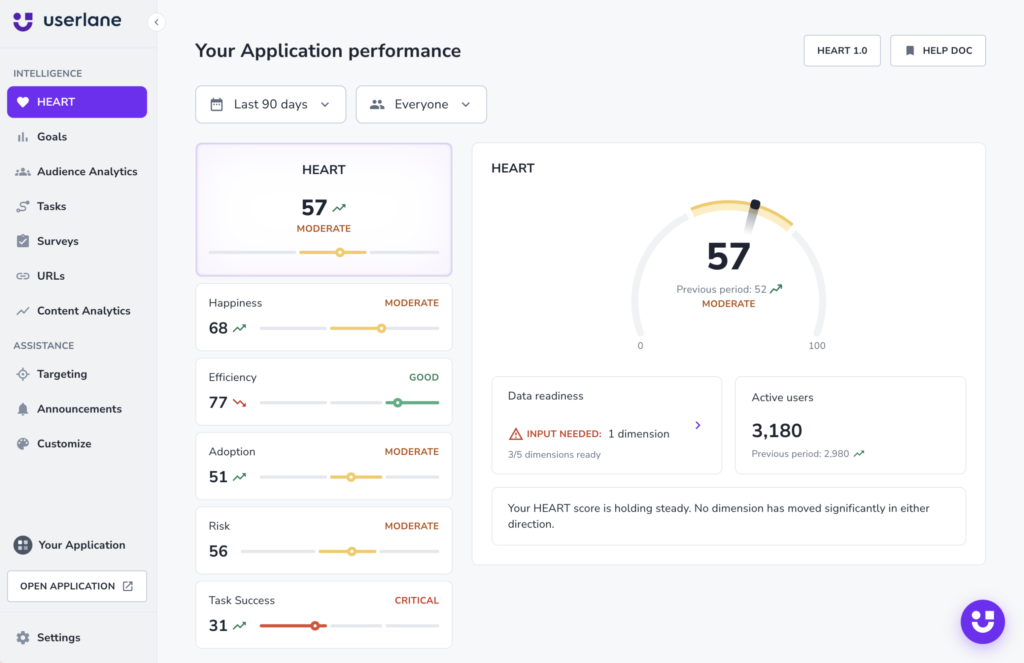
The HEART Score
Know where to act first
The HEART Score is one score for how well an application works for the people who use it. It draws on how people use the application, whether they complete the tasks that matter, and what they say in in-app Surveys. These signals are combined across five dimensions, weighted the same way for every application, and read against the expectations for the application’s category.
- Happiness: how satisfied people are with the application, measured through in-app Surveys.
- Efficiency: how quickly and smoothly people complete their work.
- Adoption: how many people use the application, how much, and whether they keep using it.
- Risk: whether people follow processes and enter data in a compliant way.
- Task success: whether people finish the workflows that matter to the business.
The HEART Score shows which applications deliver value and which need attention, and which dimension holds each one back. AI Insights explains in plain language what drives a dimension and recommends an action, so teams know where guidance, training, or process changes will help most.
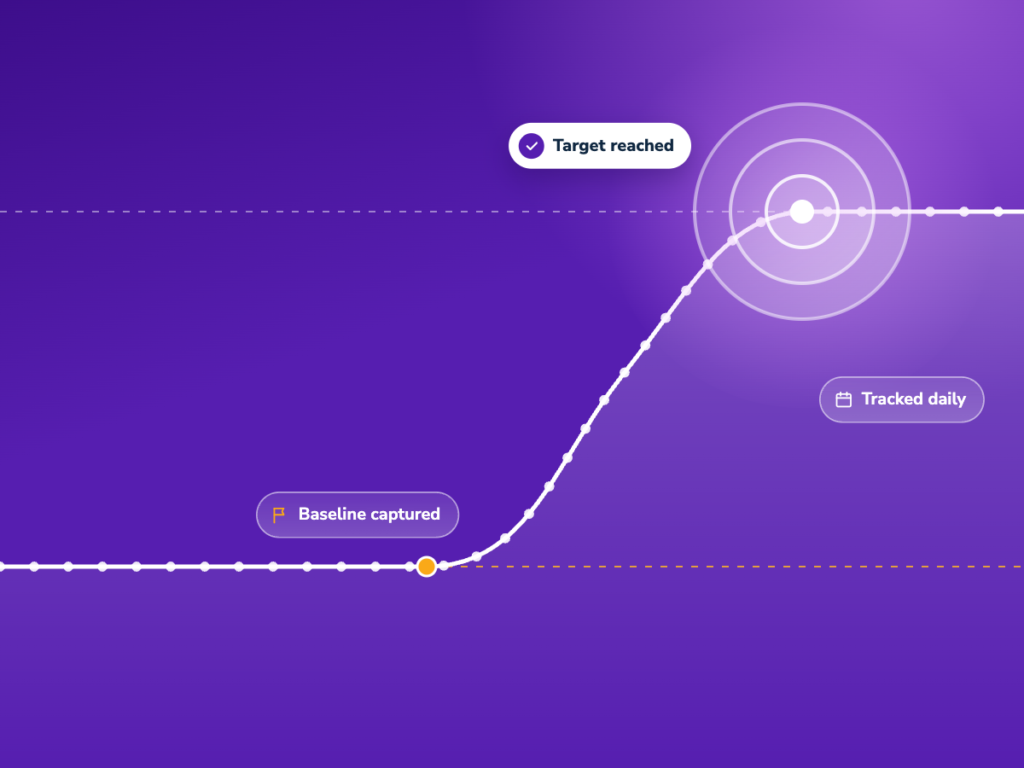
Prove the result to the board
Goals are measurable targets set for an application, each with a metric, a target value, and a due date. When a goal is created, Userlane records the starting value, so progress is always measured against where the application began.
- Agree the outcome early: pre-built goals, each with a fixed metric, so everyone measures the same thing.
- Show progress at every review: each goal shows its target, due date, and trend, so a goal that slips is visible before the deadline.
- Find the driver: each goal shows its related HEART dimension, so the team knows where to look when a goal falls behind.
Goals turn an adoption project into a result that leadership can check. At each business review, the numbers show what changed since go-live, which helps justify the budget and decide where to invest next.
Surveys
Turn feedback into a score
Surveys collect structured feedback from people inside the application they are using. There are three types: CSAT, which measures satisfaction with the application, NPS, and Standard Surveys on any topic.
- Satisfaction measured in the workflow: CSAT feeds the Happiness dimension of the HEART Score and is asked while people work in the application.
- Feedback on any topic: NPS and Standard Surveys produce their own results, so a rollout, a process change, or an internal service hears directly from the people it affects.
Surveys show how employees experience the applications they work in: what they find hard, what they value, and what they would change. Because Standard Surveys can cover any topic, teams can also ask about services and initiatives beyond the application itself. The answers show what works and what needs to change.
Intelligence works best with Assistance
Each one depends on the other
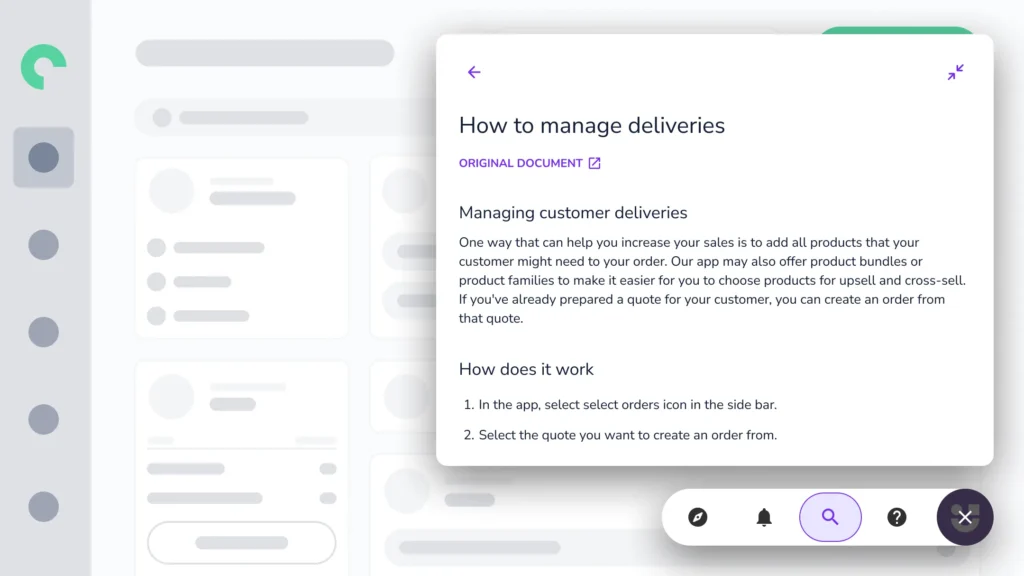
Intelligence and Assistance depend on each other. Intelligence measures what Assistance puts in place in each application, and Assistance uses what Intelligence finds to decide where to act next. Both run under one Application license.
- Insight turns into action: a weak HEART dimension shows the step where help should go.
- Action turns into proof: the score shows whether that help changed the result.

